Suffering Bastard
A revitalizing gin-and-brandy highball with lime, ginger beer, and bitters, born as a hangover cure in WWII Cairo.
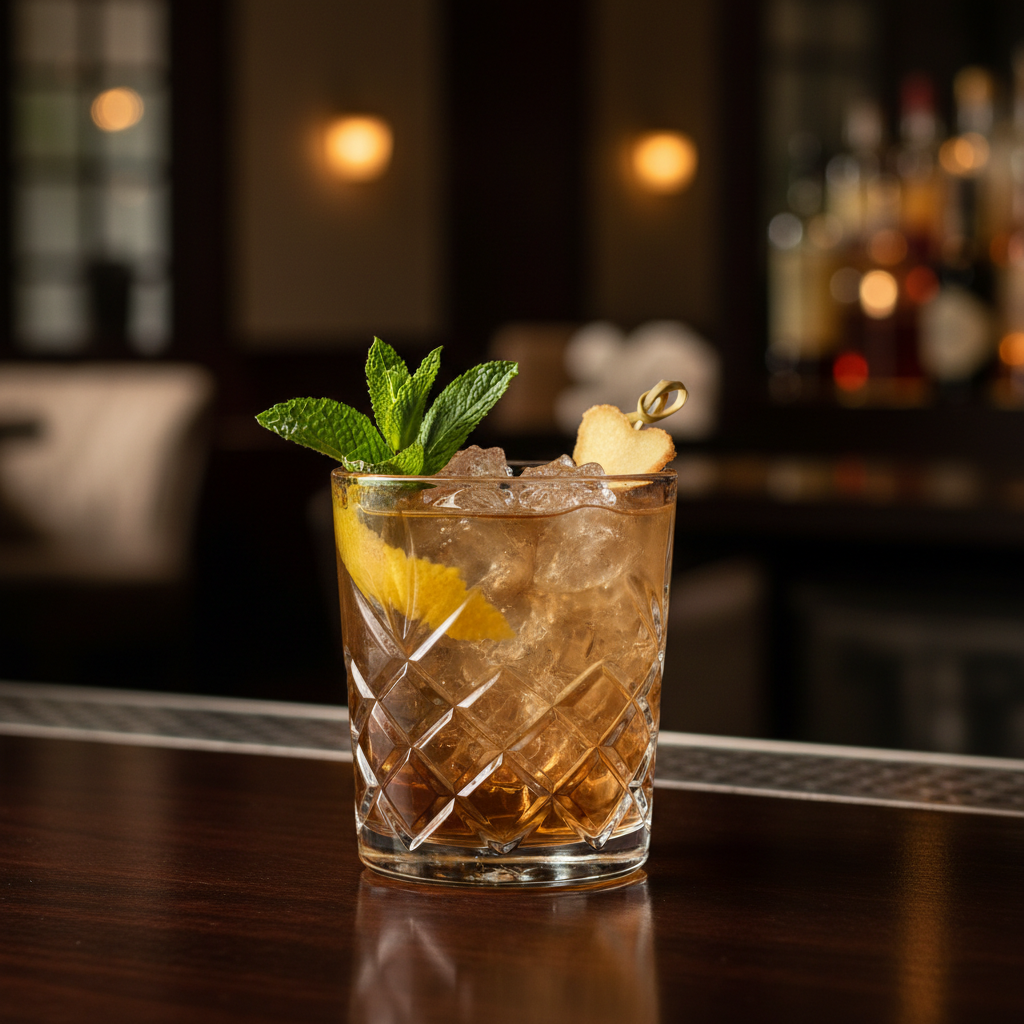
Ingredients
- 30 ml Cognac or Brandy
- 30 ml Gin
- 15 ml Fresh lime juice
- 2 dashes Angostura bitters
- Top up Ginger beer
Garnish: Mint sprig and optionally an orange slice
The Suffering Bastard is a bold, invigorating highball that marries gin and brandy with sharp lime, aromatic bitters, and a fiery crown of ginger beer. Originally devised as a potent pick-me-up, it balances spice, citrus, and warming spirit in a long, highly refreshing drink.
Despite its slightly mischievous name, this cocktail is sophisticated and surprisingly easy to drink. The combination of botanicals from the gin, rich depth from the brandy, and the snap of ginger beer creates a layered flavor profile that stays bright and lively from the first sip to the last.
Recognized as an IBA official cocktail, the Suffering Bastard has moved from battlefield remedy to modern classic. It is a great choice for those who enjoy drinks like the Moscow Mule or Dark ‘n’ Stormy but want something with more complexity and historical character.
Instructions
Official Recipe:
- Fill a Highball Glass with ice cubes to chill it while you prepare the drink.
- Add 30 ml gin, 30 ml cognac or brandy, 15 ml fresh lime juice, and 2 dashes of Angostura bitters into a cocktail shaker.
- Fill the shaker with plenty of ice to the liquid level.
- Shake vigorously for about 10–12 seconds, until the shaker feels very cold on the outside.
- Discard any excess water from the Highball Glass, keeping it filled with fresh ice.
- Pour the shaker contents unstrained into the Highball Glass (including the ice from the shaker).
- Top up with chilled ginger beer until the glass is almost full, adjusting to taste.
- Gently stir once or twice to integrate without losing too much carbonation.
- Garnish with a fresh mint sprig and, if desired, an orange slice on the rim or inside the glass.
Note: The balance depends strongly on your ginger beer. A drier, spicier ginger beer will give a sharper, more refreshing drink; a sweeter style will make it rounder and softer.
Tips
- Use quality ginger beer: A robust, spicy ginger beer (not ginger ale) is essential. It provides the drink’s backbone and should be well-chilled to maintain fizz.
- Fresh lime only: Always use freshly squeezed lime juice. Bottled lime juice will flatten the brightness and make the cocktail taste dull.
- Don't overshake: Shake just until cold. Over-dilution will make the drink watery once topped with ginger beer.
- Build over plenty of ice: A tall drink like this needs a full glass of solid cubes. More ice actually slows dilution and keeps the flavors focused.
- Express the mint: Before garnishing, gently slap the mint sprig between your palms to release aromatic oils without shredding the leaves.
- Balance the spirits: If you prefer a slightly lighter drink, you can reduce both spirits to 25 ml each while keeping the rest of the recipe the same.
- Serve immediately: The Suffering Bastard is at its best very cold and sparkling. Serve as soon as it is topped with ginger beer.
Classic Variations
- Bourbon Suffering Bastard: Replace the brandy with bourbon for a deeper, vanilla-tinged profile.
- Suffering Bar Steward: A riff popular in tiki circles that boosts the ginger component and sometimes adds a dash of orange curaçao.
- Suffering Senor: Swap gin for tequila while keeping brandy, lime, bitters, and ginger beer for a drier, agave-forward twist.
- Rum Bastard: Replace the brandy with aged rum for a more tropical, molasses-rich character.
- Short Suffering: Serve the shaken ingredients strained over ice in a Rocks Glass and top with a smaller amount of ginger beer for a more concentrated flavor.
Flavor Profile
On the first sip, you get the lively fizz and heat of ginger beer, lifted by bright, tart lime. The aromatics of the mint and bitters come through on the nose, giving an herbal, slightly spicy impression.
On the mid-palate, the botanicals of the gin intertwine with the round, fruity warmth of the cognac or brandy. The Angostura bitters add notes of clove, cinnamon, and baking spice that support the ginger.
On the finish, the spice from the ginger and bitters lingers, with a warming, gently drying feel from the spirits. The drink remains refreshing, with citrus and ginger staying present all the way through.
History
The Suffering Bastard was created in the early 1940s at the Shepheard’s Hotel in Cairo, Egypt, by bartender Joe Scialom. Working in the midst of World War II, Scialom set out to create a hangover cure for Allied officers who were regularly overindulging in spirits of often dubious quality.
Originally called the “Suffering Bar Steward” (a tongue-in-cheek name that, when said quickly, sounds like its more profane counterpart), the drink became hugely popular with soldiers stationed in North Africa. Its mix of gin, brandy, lime, bitters, and ginger beer provided both refreshment in the desert heat and a bracing jolt to the system.
Over time, the cocktail made its way into bars around the world and into cocktail literature. Today, the Suffering Bastard is recognized as an official IBA cocktail, securing its place as a historic, battle-born classic that still feels modern in flavor and style.
Cheers!